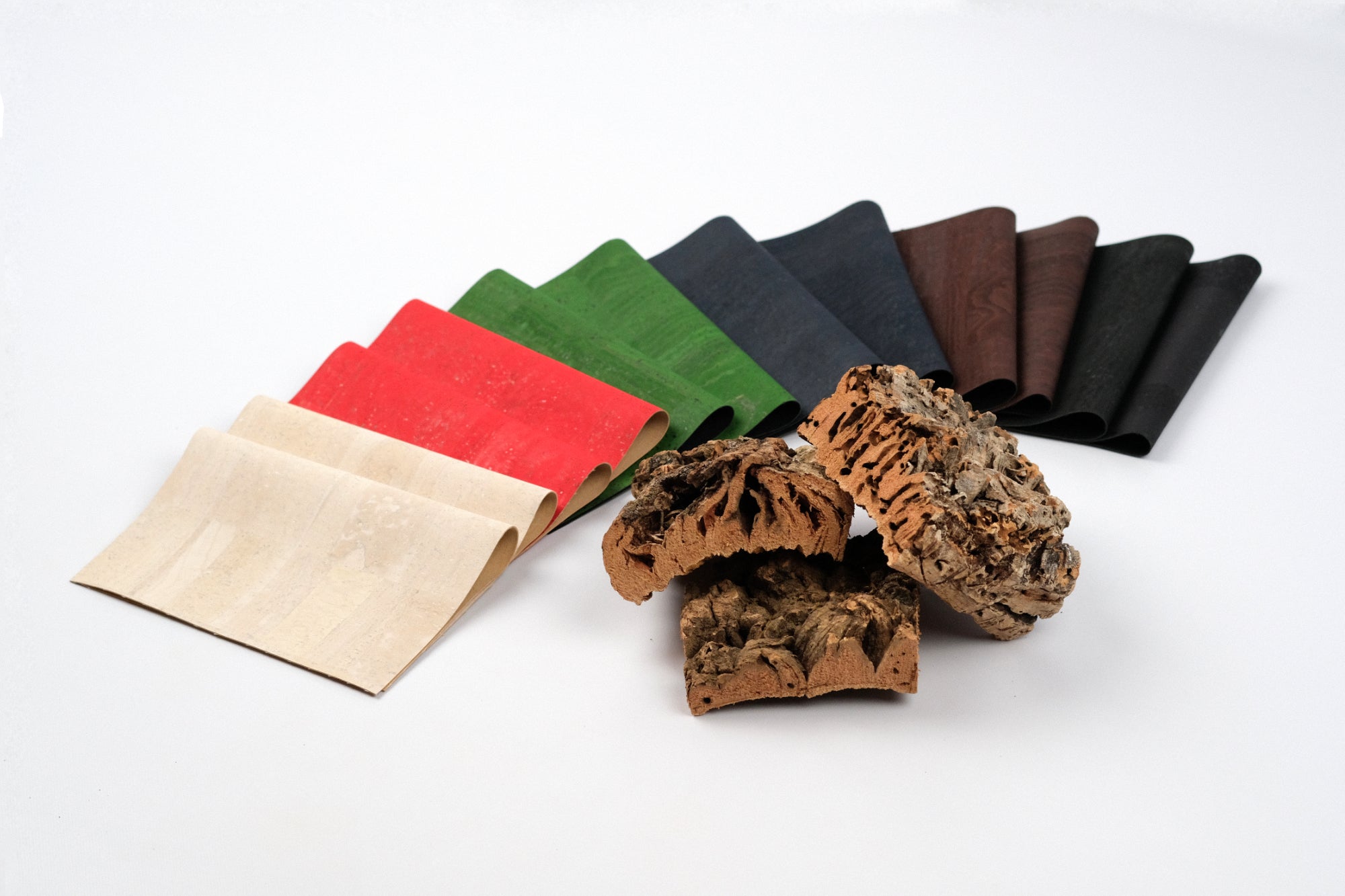
Learn more about cork leather
Cork leather
Cork leather or cork fabric is characterized by its unique properties. It can be sewn on a standard domestic sewing machine. It is light, supple, but still extremely robust and tear-resistant. Its other benefits include a scratch-resistant surface, excellent abrasion resistance and water and stain resistance.
There are many processing options for cork leather: it can be cut, sewn, ironed, riveted, perforated, glued, painted, written on, stapled, die-cut and embossed. This makes it ideal for a wide range of DIY projects.
With a fabric backing similar to faux leather, cork leather is easy to handle. It is not prone to breaking or fraying, so there is no need to finish the edges. Like animal leather, cork leather also develops an individual patina over time.
You can also find more cork material information and tips in the individual categories and in the product descriptions.
- Natural product
- Antistatic
- Odorless
- Thickness of approx. 1 mm
- Excellent dimensional stability
- Does not release solvents or hazardous compounds
- Sound and heat insulation ability
- Made from renewable resources
- 100% recyclable
How cork leather is made and its environmental properties
Cork leather is produced by processing carefully stacked cork panels that combine the unique properties of this material. By perfecting the size and density of the cork granules, an ideal balance of elasticity, homogeneity and tensile strength is achieved. Before processing, the cork particles are thoroughly cleaned to ensure the absence of any hazardous substances.
To fix it, our cork leather is pressed onto the back of the fabric using polyurethane glue. This glue, which is water-based and formaldehyde-free, does not emit any harmful compounds and therefore does not pose a risk to human health. Thanks to its natural fire-retardant properties, cork does not spread flames and does not release toxic gases when burned.
As a natural product, cork is obtained from renewable sources and can be reused for numerous applications.
Cork leather and sustainability
Made from one of the most sustainable materials in the world - cork. As an environmentally conscious choice, cork uniquely supports modern environmentalism as it is derived from the renewable bark of the cork oak tree. What makes cork special? Peeling the bark does not harm the tree; in fact, it actually promotes the growth and health of the tree. The tree is only ready for the first harvest after around 25 years, and after that the harvest can continue every 9 years.
In addition, the majority of cork traded worldwide comes from Portugal, where around 51% of world trade takes place. This proximity to the main growing areas means that no long transport routes are necessary, which in turn supports environmental considerations and has a positive impact on our CO2 balance.
Our high-quality cork leather not only offers a perfect alternative to animal leather, but also actively contributes to protecting our environment. Explore our cork leather collection and let the robustness and sustainability of cork convince you.
Caring for cork leather
For care, we recommend using a mild cleaning agent. Please avoid solvents such as alcohol, acetone, paint thinner, bleach, oils and similar products as well as ink pens as these can be absorbed into the material. Spilled liquids such as beer, wine, juices, soft drinks, coffee, tea or chocolate should be cleaned as quickly as possible, especially if the liquid is heavily coloured. Sauce stains should be treated immediately to prevent staining. Contact with suntan oils should be avoided; If this happens, clean the area immediately with liquid soap or shampoo.
If necessary, clean it with a soap solution and a white cotton cloth moistened with water. Light colours may require more frequent cleaning. Avoid vinegar, waxes, silicones, all-purpose cleaners, stove cleaners or similar cleaning products as they can cause permanent damage. Then dry the surface with a dry, white cotton cloth.
If dye transfers from accessories onto the material, remove the stain immediately with shampoo and a white cotton cloth, rinse the area with water and allow it to dry.
If there are slight creases during transport, they can easily be smoothed out by ironing the reverse side.
Join our newsletter
Be the first to hear about new collections and exclusive offers.